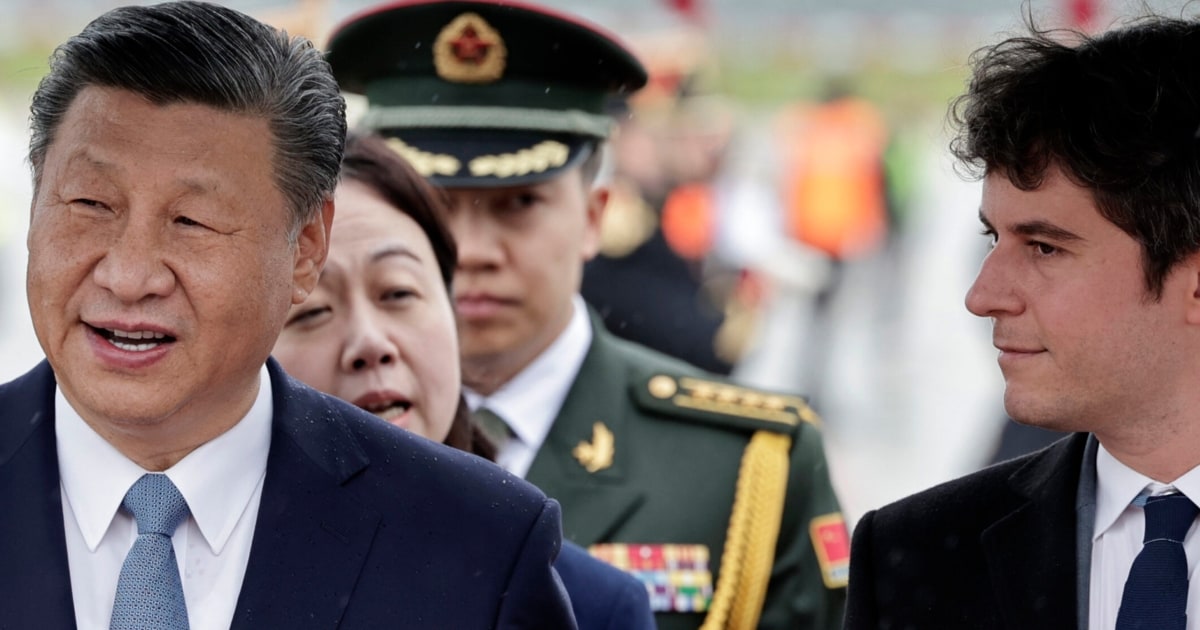
The High Stakes of Diplomacy: Navigating Global Relations Through Xi's Top-Level Meetings
In the intricate tapestry of international relations, direct encounters between heads of state often serve as crucial junctures, shaping geopolitical landscapes and global economic trajectories. Few such encounters have drawn as much attention and speculation as the xi staatschefs treffen, particularly those involving Chinese President Xi Jinping and former US President Donald Trump. These meetings, or even their anticipation and postponement, were not merely ceremonial; they were pivotal moments loaded with economic anxieties, strategic calculations, and the immense pressure of global expectations.
The relationship between the United States and China, representing the world's two largest economies, is a barometer for global stability. When their leaders meet, the world watches, hoping for breakthroughs, fearing escalations, and analyzing every word, gesture, and delay. This article delves into the significant context surrounding these high-profile interactions, exploring the dynamics of trade wars, diplomatic maneuvering, and the profound implications of direct dialogue between powerful nations.
The Crucible of Commerce: Xi's Staatschefs Treffen Amidst Trade Tensions
The backdrop to many of the anticipated xi staatschefs treffen was the escalating trade and tariff war between the US and China. This economic dispute, characterized by reciprocal tariffs on billions of dollars worth of goods, sent ripples through global supply chains and financial markets. Both nations, deeply intertwined economically, found themselves in a high-stakes standoff, making any direct communication between their leaders critically important.
One such moment of intense anticipation came when US President Donald Trump, just hours before a planned meeting with Chinese President Xi Jinping in Busan, South Korea, expressed his eagerness on Truth Social: "I look very much forward to my meeting with Chinese President Xi." This sentiment underscored the global hope that direct dialogue could untangle the complex web of trade disagreements. The world eagerly awaited whether this highly anticipated summit between the leaders of the two largest economies would yield a breakthrough in the ongoing trade and customs dispute. Trump had, on multiple occasions, expressed optimism about achieving a comprehensive deal with China, fueling hopes that a face-to-face meeting could be the catalyst.
These were not isolated events but part of a continuous diplomatic saga. For instance, the meeting would have marked the first direct encounter between Trump and Xi since 2019 when they last met during the G20 Summit in Osaka, Japan, early in Trump's first term as US President. Such gatherings transcend mere negotiation; they are opportunities for leaders to build personal rapport, assess intentions, and signal strategic directions, all of which are crucial for de-escalating tensions and fostering cooperation in an interconnected world.
Diplomatic Dance: Postponements, Expectations, and Geopolitical Undercurrents
The path to high-level summits is rarely straightforward, often characterized by strategic delays, public pronouncements, and the delicate art of diplomatic maneuvering. The planned meetings between President Trump and President Xi were no exception, revealing the intricate layers beneath the surface of international diplomacy.
On one occasion, President Trump announced that he would meet with Chinese President Xi Jinping not in the originally targeted two weeks, but in approximately five to six weeks, stating that the proposed meeting had been postponed with Beijing's consent. "I look forward to seeing President Xi. I think he looks forward to seeing me too," Trump stated during a visit by Irish Taoiseach Micheál Martin to the White House. This unexpected shift immediately raised questions, especially since confirmation from China was not immediately available.
Trump offered various explanations for these delays, often hinting at broader geopolitical considerations. At one point, he suggested that Washington had requested a postponement of about a month, stating, "I would very much like to come, but because of the war, I want to be here," referencing a conflict with Iran. In a subsequent interview with the "Financial Times," Trump tied the postponement to his desire for Beijing's support in securing the Strait of Hormuz before the proposed meeting. He reportedly said, "We would like to know beforehand," implying that two weeks was too short a timeframe for such assurances.
However, this narrative was swiftly challenged. US Treasury Secretary Scott Bessent contradicted Trump's assertion, stating shortly thereafter to CNBC, "Should the meeting be postponed for any reason, it is due to logistical reasons." He further suggested that overseas travel might not be "optimal" given the prevailing circumstances. This divergence in explanations highlights a common feature of summit diplomacy: the interplay between public messaging, strategic leverage, and practical considerations. It underscores that every statement and every delay in high-stakes international negotiations can carry multiple meanings and serve various objectives, from setting preconditions to managing domestic perceptions.
Understanding Summit Diplomacy: Key Learnings from Xi's High-Profile Encounters
The history of xi staatschefs treffen offers valuable insights into the nature of summit diplomacy itself. These encounters are more than just photo opportunities; they are crucial platforms for direct communication, conflict resolution, and the forging of pathways for future cooperation. Understanding their dynamics is vital for anyone interested in international relations, global economics, or political science.
- The Power of Personal Rapport: While policy papers and expert negotiations lay the groundwork, the personal chemistry and direct dialogue between leaders like Xi and Trump can sometimes unlock impasses that lower-level discussions cannot.
- Managed Expectations: "Breakthroughs" are often dramaticized by media. In reality, most summits serve to incrementally advance agendas, clarify positions, or prevent further escalation, rather than achieving instant, revolutionary deals.
- Reading Between the Lines: Public statements and official reasons for postponements or shifts in plans often conceal deeper strategic objectives or political maneuvering. Discrepancies, such as those between Trump's and Bessent's explanations, offer clues into the true complexities at play.
- Multi-faceted Agendas: Leaders rarely meet with a single issue in mind. Trade, security, regional stability, human rights, and domestic political pressures all intersect and influence the discussions.
- Strategic Sequencing: The timing of a meeting, or its postponement, can be a deliberate strategic tool used to exert pressure, gain concessions, or align with a more favorable political or economic environment.
For businesses and observers, recognizing these dynamics means understanding that the outcome of a xi staatschefs treffen, or any major bilateral summit, is rarely singular. Instead, it's a reflection of ongoing negotiations, domestic pressures, and broader geopolitical strategies. Paying attention not just to what is said, but also to what is unsaid, who says it, and when, provides a more accurate picture of international diplomacy.
Beyond the Bilateral: The Global Impact of Key Leader Interactions
While the focus often falls on the immediate bilateral implications of a specific xi staatschefs treffen, such as those between the US and China, the ripple effects extend globally. Decisions made or pathways charted in these meetings can influence international trade flows, currency valuations, technological development, and even regional security alliances. For instance, a resolution or de-escalation of the US-China trade war would have brought immediate relief to countless businesses worldwide grappling with uncertainty and increased costs.
President Xi Jinping's role as a prominent global leader means his interactions with other heads of state, whether at multilateral forums like the G20 or in bilateral settings, are closely watched for signals on China's foreign policy direction, its economic trajectory, and its stance on critical global issues. These interactions contribute to the ongoing shaping of global governance and the balance of power, affecting everything from climate agreements to pandemic responses.
Ultimately, these high-level diplomatic exchanges underscore the interconnectedness of our world. No nation, however powerful, operates in isolation. The need for leaders to engage directly, to negotiate, and to build understanding remains paramount for navigating the complex challenges and opportunities of the 21st century. The anticipation and analysis surrounding each xi staatschefs treffen reflect a global recognition of their enduring significance.
In conclusion, the xi staatschefs treffen, particularly those involving US presidents, stand as emblematic moments in contemporary international relations. They encapsulate the tension between economic competition and geopolitical cooperation, the delicate dance of diplomatic signaling, and the profound impact of direct leadership engagement. While "breakthroughs" might be rare, the very act of leaders meeting, anticipating meetings, or postponing them, is itself a powerful statement, constantly redefining the contours of global power and partnership. Understanding these dynamics is key to comprehending the intricate world stage.